
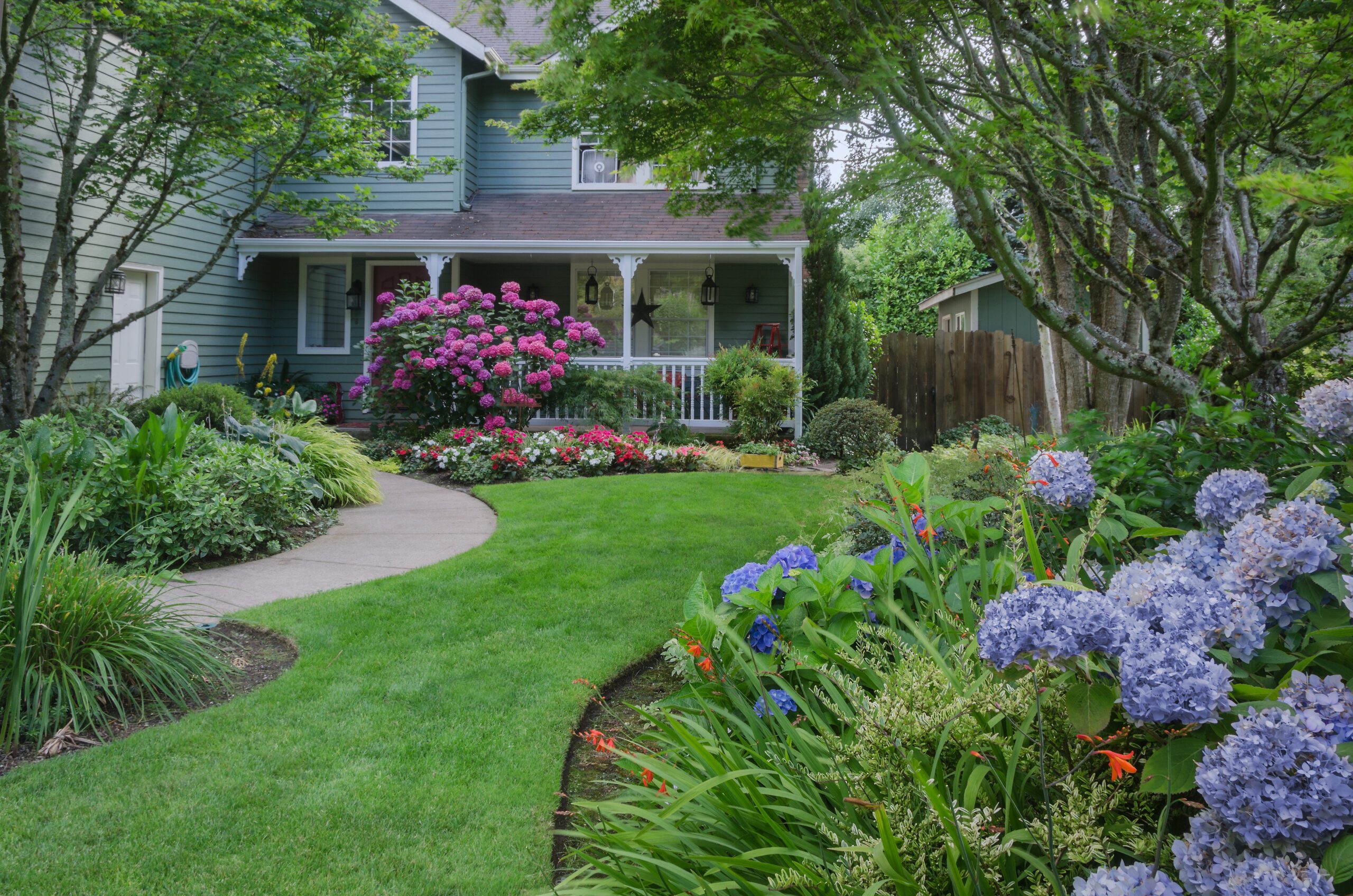
1. Plan According to Your Home and Space
Consider your home’s architectural style to ensure harmony between the yard and the house. Evaluate sunlight, soil type, and climate to select plants that thrive naturally. Think about how much time and effort you can devote to maintenance. Planning ahead ensures the space remains attractive year-round and prevents planting mistakes that may be costly later.
2. Design with Harmony in Mind
Choose plants, pathways, and decorative elements that complement your house rather than compete with it, using creative landscaping accents to enhance its character. Traditional homes benefit from soft flower beds and curved lines, while modern homes pair well with structured greenery and clean geometric shapes. Consistency in design makes the yard feel cohesive and well thought out.
3. Create Clear and Inviting Walkways
Well-defined paths guide visitors toward the entrance and provide visual organisation. Frame walkways with lush plants, shrubs, or flowers to create a welcoming atmosphere. Using curves or natural stepping stones can make the journey through the yard more engaging.
4. Use Foundation Plantings
Mix evergreens with seasonal plants to maintain beauty throughout the year. Shrubs and greenery placed along the foundation help soften the structure’s lines while adding visual depth. Layering different plant heights creates a natural, dynamic look without overwhelming the façade.
5. Incorporate Outdoor Lighting
Strategically placed lights improve safety along pathways and entrances. Highlight trees, shrubs, and architectural details to add charm at night. Solar or low-voltage lighting is energy-efficient and easy to install, allowing your yard to look inviting even after dark.
6. Ensure Year-Round Interest
Include perennials, ornamental grasses, and shrubs with seasonal blooms or colourful foliage. Containers and window boxes add accents, particularly in narrow or limited spaces. Even in winter, evergreen shrubs and grasses maintain texture and visual interest.
7. Utilise Terraces and Layers
For sloped properties, terraces help manage elevation changes and prevent erosion. Layered planting zones create dimension, making the yard visually appealing in every season. Adding stone or wooden retaining walls enhances the design while providing practical structure.
8. Opt for Low-Maintenance Options
Drought-tolerant plants such as succulents, ornamental grasses, and native species require minimal care. They provide natural beauty without constant watering or pruning, making them ideal for busy homeowners or arid climates.
9. Coordinate Colours and Heights
Repeating colours through flowers, shrubs, or accents unifies the landscape. Balance tall trees with medium shrubs and low ground covers to frame entrances and windows without blocking views. Variety in texture and height adds interest and dimension.
10. Add Special Features
Incorporate arbours, stone elements, water features, or decorative benches for personality. These details make the yard memorable and provide functional spots for relaxation or gatherings.
11. Plan for Functionality
Design the yard around how you will use it. Consider seating areas, play spaces, or focal corners that invite interaction. A practical layout combined with beauty ensures that your front yard is both stunning and enjoyable.
By combining careful planning, layered plantings, thoughtful lighting, and charming accents, you can create a lush front yard that boosts curb appeal, enhances your home’s character, and reflects your personal style throughout the year.