
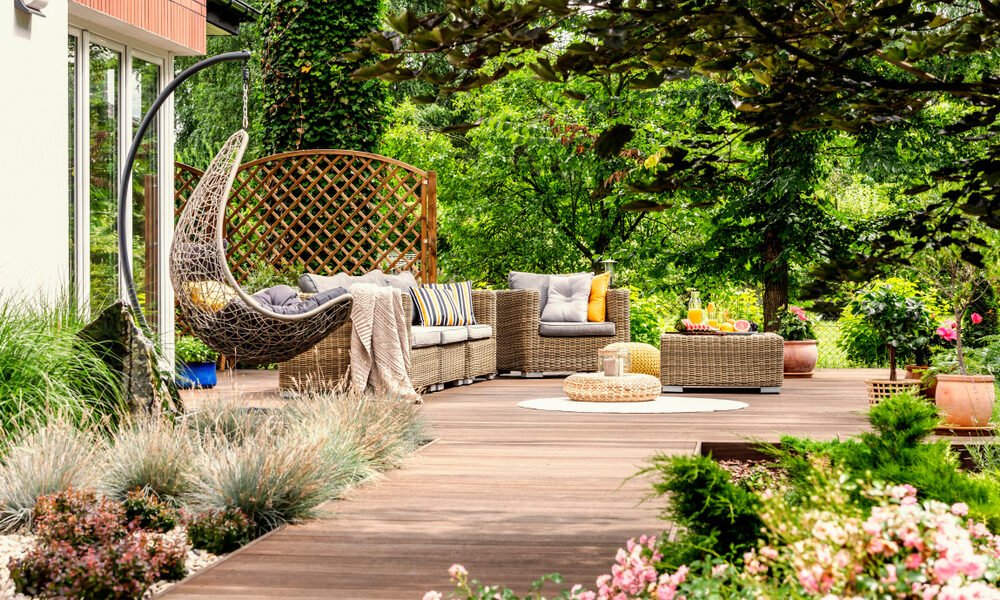
Garden design is often seen as a matter of personal taste, yet successful landscapes typically follow established principles. Years of practical experience show that certain guidelines, along with exterior landscaping inspiration, help create gardens that feel balanced, inviting, and functional without becoming rigid or overly complex. When applied thoughtfully, these principles allow both professional designers and home gardeners to create outdoor spaces that are visually appealing, well-organized, and comfortable for everyday use.
1. The Principle of Meaningful Enclosure
One of the most important foundations of garden design is enclosure. A space feels secure and inviting when its vertical boundaries-such as hedges, walls, or trees-are proportionate to its width.
Key guideline:
- A space feels enclosed when the height of its vertical elements is at least one-third of the horizontal distance.
This balance creates a sense of refuge while still allowing openness where needed.
2. Using Regulating Lines for Order
Regulating lines are imaginary lines drawn from architectural or landscape features that help organize a design. These lines may originate from:
- Building edges
- Property boundaries
- Existing trees or pathways
By aligning landscape features along these lines, the garden gains rhythm, clarity, and cohesion. This underlying structure provides what designers often call “strong bones.”
3. Achieving Balance Through Proportion
Proportion plays a major role in how a garden feels. One widely respected guideline is the Golden Rectangle, where the ratio of length to width is approximately 1:1.6.
This proportion works especially well for:
- Patios and terraces
- Lawns and raised beds
- Arbors and seating areas
Such dimensions naturally feel balanced and visually pleasing.
4. Designing Comfortable Steps
When creating steps, comfort and safety are essential. A reliable design formula ensures easy movement:
- Twice the riser height plus the tread depth should equal about 26 inches
Additionally, a minimum width of 5 feet allows two people to walk side by side comfortably.
5. Think Bigger When in Doubt
When deciding between smaller and larger design elements, opting for larger proportions is often more effective. Features such as wider steps, taller pergolas, and longer pathways create a feeling of openness and permanence, enhancing both the visual appeal and the overall experience of the outdoor space.
6. Planting from Large to Small
Successful planting follows a logical order:
This approach protects newly planted areas and helps establish the garden’s structure early.
7. Use Plants in Groups
Planting in masses rather than isolated specimens creates a stronger visual impact. Repetition brings harmony and allows the eye to rest, making the garden feel intentional rather than cluttered.
8. Never Compromise on Planting Quality
The most important planting rule is preparation. Healthy growth depends on proper soil, depth, and spacing.
Remember:
- Well-prepared planting areas matter more than expensive plants.