
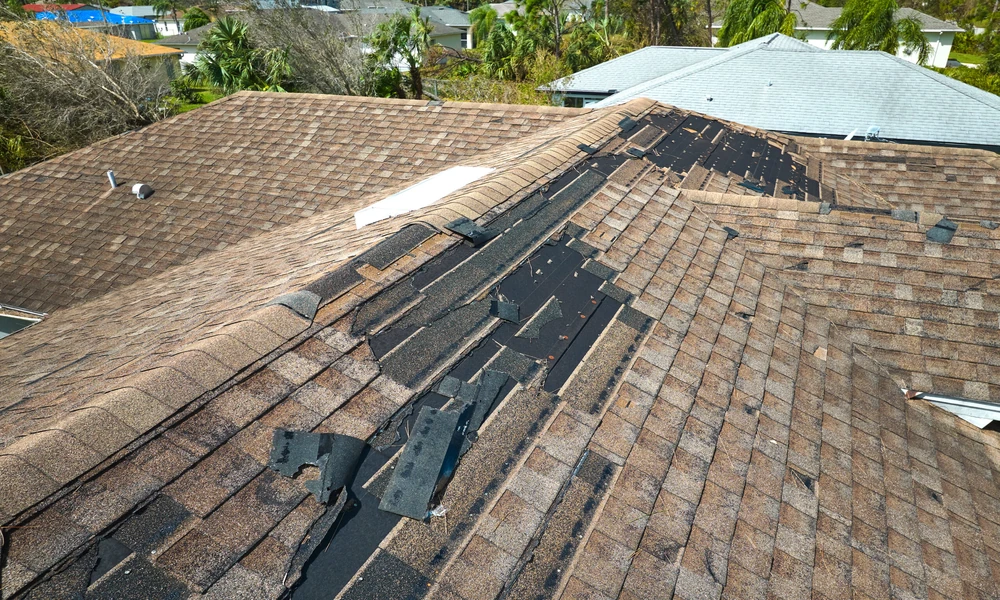
Every homeowner with an aging roof eventually faces the same question: patch it again or pay for a new one. Repairs cost less today, but a roof that needs constant patching can end up costing more than replacement. Replacement is a major expense, yet doing it too early wastes money. The right call depends on a handful of factors. Work through them one at a time and the answer is usually clearer than you expect.
The quick answer
If the damage is limited to one area and the rest of the roof is in good shape, repair is usually the sensible choice. If the roof is near the end of its expected life, or problems keep appearing in different places, replacement tends to be the better investment. Everything below helps you tell which situation you are in.
Age of the roof
Roofs do not last forever, and age is the first number to check. Asphalt shingles are commonly expected to last roughly 20 to 25 years, though climate, installation quality, ventilation, and maintenance can move that figure up or down.
Repair makes sense when the roof is well within its expected lifespan and the trouble comes from a specific event, such as a fallen branch or a storm that lifted a few shingles.
Replacement makes sense when the roof is at or beyond its expected life. Even if it looks acceptable from the ground, aged materials become brittle and repairs on them often do not hold.
How widespread the damage is
Location and spread matter more than the number of damaged spots. A professional can map the damage across the roof and tell you whether you are looking at an isolated problem or a general decline. A contractor such as Roof Chase Renovations can inspect the full surface, flashing, and edges, and show you photos so you can see the condition for yourself instead of relying on a verbal summary.
Repair makes sense when problems are confined to a small section, such as a few missing shingles, one damaged vent boot, or a single worn patch of flashing.
Replacement makes sense when curling, cracking, or granule loss shows up across large areas. Widespread wear means new patches will sit next to materials that are close to failing.
Leaks and moisture
Water finds its way in through small openings and travels before it shows up as a stain. A single leak with a clear cause, such as damaged flashing around a chimney, can often be fixed without touching the rest of the roof.
Repair makes sense when the leak has a clear, fixable source and the surrounding decking is dry and solid.
Replacement makes sense when leaks keep returning in different places, the attic shows widespread dampness, or insulation and decking have been wet for some time. Repeated leaks usually mean the roofing system as a whole is no longer shedding water.
What the structure underneath is telling you
Roofing material sits on a deck and a frame, and those parts matter just as much. Soft spots, sagging lines, or a bouncy feel underfoot (checked only by a professional, never by you) point to moisture damage or structural problems.
Repair makes sense when a small section of decking needs replacing and the rest is sound.
Replacement makes sense when the deck or framing shows broad damage. Putting new material over a weak base only hides the problem.
Cost over time
Compare more than the price on the estimate. Ask yourself how many repairs you have paid for in the last few years and how much interior damage you have already dealt with. Three or four repair bills in a short period, added to the cost of a deferred replacement, often exceed what a new roof would have cost.
It also helps to think about how long you plan to stay. A new roof is a selling point, while a roof with a history of leaks can make a buyer nervous or lead to a lower offer.
If you replace, use it as a chance to upgrade
A replacement is the best moment to improve how the roof handles severe weather. The Insurance Institute for Business and Home Safety runs a voluntary program called FORTIFIED, and its website at fortifiedhome.org explains standards for stronger roof construction, including how the deck is sealed and attached. In some states, homeowners with a FORTIFIED designation can qualify for insurance discounts, grants, or other incentives, so ask your insurer and your contractor what applies where you live.
Even if you do not pursue a formal designation, a replacement is the time to address ventilation, flashing, underlayment, and drainage, since all of them are easier to improve when the old roof is already off.
Get a second opinion before committing
For a large job, get at least two written estimates and ask each contractor to explain what they found. Compare scope, materials, warranty terms, and what happens if hidden damage turns up once the old layer is removed. Be cautious about anyone who pushes a quick decision or offers a very different diagnosis without showing evidence. Photos, measurements, and a clear written scope are better than a sales pitch.
Whatever you decide, do not let a suspected leak sit. Small problems are cheaper to solve early, and an honest inspection costs far less than the interior damage that follows a roof left alone too long.